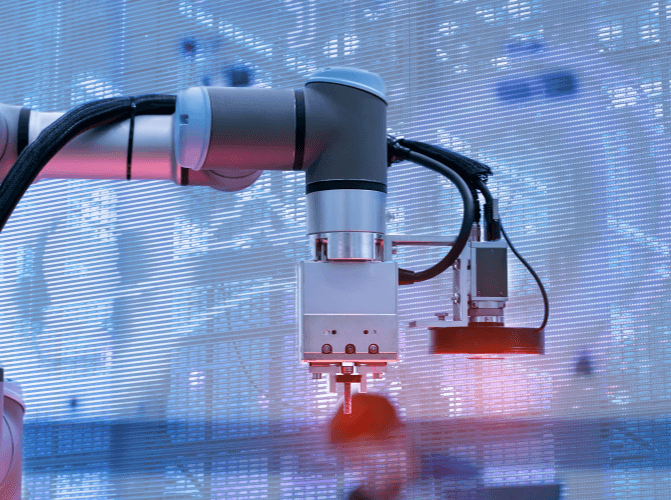
As manufacturing processes become more complex, choosing automation equipment is no longer just about machine speed or production capacity. Manufacturers must consider precision, system integration, production flexibility, and long-term operational reliability. These factors are particularly important in lithium battery, automotive, and medical device manufacturing, where small process deviations can affect product quality and production efficiency.
Advanced manufacturing automation solutions stand out through their engineering capabilities. By combining mechanical design, motion control, intelligent software, and system integration, they help manufacturers build coordinated production environments that meet demanding industrial requirements.
Precision Engineering and Motion Control
Precision is essential in processes such as battery cell stacking, component assembly, and automated welding. Even minor positioning deviations can result in assembly defects, material waste, or inconsistent product quality.
Advanced manufacturing automation technology addresses these challenges through high-precision sensors, servo systems, motion controllers, and optimized mechanical structures. These components coordinate equipment movements and maintain positioning accuracy during continuous operation.
Motion control is particularly important when multiple components operate simultaneously. Engineers must manage acceleration, deceleration, synchronization, and positioning to ensure that each workstation receives materials at the correct time and location.
FHS develops precision control technologies for automated manufacturing, including high-precision position sensing and motor drive control. Its technical capabilities also cover torque ripple suppression, which helps improve motion stability in magnetic levitation transport applications.
Flexible Design for Changing Production Requirements
Manufacturing requirements frequently change as businesses introduce new product models, adjust production volumes, or modify assembly processes. Equipment that cannot accommodate these changes may require costly modifications or replacement.
Flexible design helps manufacturers respond through modular equipment structures, adjustable workstations, and programmable control systems. These features allow production lines to accommodate different configurations without redesigning the entire system.
This is especially relevant to battery manufacturing, where different cell formats and battery pack structures require specific handling methods and assembly sequences.
FHS provides automation solutions for prismatic, pouch, and cylindrical battery production, as well as power battery module and pack assembly. Its production-line configurations also support applications such as CTP, blade battery, and CTC. This project-oriented approach allows equipment configurations to match different manufacturing processes.
Intelligent Transport and System Integration
Material handling is another important factor in automation system design. Conventional conveyors generally follow fixed transportation routes, which may restrict flexibility when production processes require independent material movement or frequent adjustments.
FHS‘s Flexible Transport System (FTS) incorporates magnetic levitation technology into automated conveyor systems. Individual movers are controlled through magnetic fields, allowing materials to move between workstations with greater flexibility.
Its technical design includes high-precision position sensors, absolute-value encoder technology, and intelligent scheduling algorithms. The control system also incorporates mover scheduling and collision-prevention functions to coordinate transportation activities.
These capabilities demonstrate how advanced manufacturing automation technology combines mechanical engineering, electrical control, and intelligent software. Integrating transportation with production control can improve workstation coordination and reduce unnecessary material transfers.
Software, Simulation, and Production Data Management
Hardware performance alone does not determine the effectiveness of an automation system. Software and digital engineering tools also influence equipment development, commissioning, and daily operations.
Virtual simulation allows engineers to evaluate equipment layouts, movement sequences, and potential interference before installation. Identifying design problems early can reduce commissioning adjustments and project delays.
Manufacturing execution systems (MES) provide another important capability. By collecting production information and maintaining process records, MES platforms help manufacturers monitor production status and improve traceability.
FHS’s technology portfolio includes virtual simulation and debugging, MES software development, vision software development, digital twin technology, and modular electrical design. These capabilities support the development of integrated automation systems for complex manufacturing environments.
Industry-Specific Engineering and Customization
Different industries have different automation priorities. Lithium battery manufacturers focus on cell handling and stacking accuracy, while automotive component manufacturers require reliable assembly and welding processes. Medical device production places particular importance on precision and quality control.
Therefore, standardized equipment may not satisfy every manufacturing requirement. Automation suppliers need to understand the customer’s production processes before designing an appropriate system.
Jiangsu FHS Smart Technology Co., Ltd. serves new energy, automotive, and medical manufacturing sectors through customized automation equipment and production-line solutions. Its capabilities cover control technology, laser welding, assembly, testing, smart factory technology, and flexible transportation.
By combining these engineering disciplines, FHS can address different production requirements rather than focusing on a single machine category.
Designing Automation for Long-Term Production Needs
The value of an automation design shows up in how well it handles real production constraints—changeovers, precision limits, and integration with existing lines. Precision control, flexible configurations, intelligent transportation, and software integration all contribute to more capable manufacturing systems.
For B2B manufacturers evaluating automation suppliers, equipment specifications should not be the only consideration. They should also assess system compatibility, future production requirements, maintenance accessibility, and integration across different workstations.
With its capabilities in motion control, magnetic levitation transport, digital engineering, and customized industrial equipment, FHS demonstrates how integrated automation design can support demanding manufacturing environments. Well-engineered automation does more than replace repetitive tasks; it gives manufacturers a more stable base for efficiency, consistency, and long-term competitiveness.