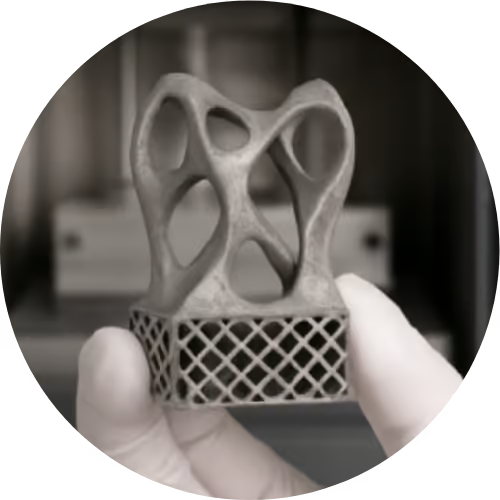
Research and product development often require more than computer simulations. Engineering teams need physical components to evaluate design assumptions, measure performance, and identify problems before moving toward production. Conventional manufacturing can make early experiments costly, particularly when designs involve complex geometries, dedicated tooling, or frequent revisions.
A metal 3D printer for research can help address these challenges. Selective laser melting (SLM) melts metal powder layer by layer to create 3D components, supporting experimental design, material testing, and prototype validation. Universities, research institutes, and industrial R&D teams can use this process to refine designs while reducing the need for dedicated tooling during revisions.
Making Design Verification More Flexible
A major challenge in experimental development is translating a theoretical design into a physical sample. A component may perform well in simulation but reveal unexpected deformation, assembly problems, or functional limitations during testing. Researchers need a practical way to investigate these differences and refine their designs.
Metal additive manufacturing connects computer-aided design (CAD) with physical production. Engineers can revise a digital model, prepare a new build, and manufacture another sample for comparison. This approach is especially useful when a project requires multiple iterations or involves geometries that are difficult to machine conventionally.
Consider an engineering team investigating cooling channels for a metal component. The researchers could prepare three designs with different channel layouts, manufacture test specimens, and measure heat transfer under the same operating conditions. They could then compare the results, identify the most promising configuration, and revise the design for another round of testing.
This workflow reduces repeated tooling changes and makes design alternatives easier to compare. Researchers can test initial concepts and use measured results to guide revisions.
Total development time still depends on build preparation, printing, post-processing, and inspection. Therefore, evaluate the full workflow rather than printing time alone.
Investigating Materials and Complex Structures
Material research often requires controlled comparisons between alloys, geometries, and processing conditions. Metal additive manufacturing allows researchers to produce test specimens with specific designs and investigate how manufacturing variables influence the resulting properties.
Depending on the equipment and process parameters, SLM can produce intricate structures, internal channels, thin walls, and topology-optimized components. These capabilities support research into lightweight engineering, thermal management, energy systems, and advanced component design.
However, geometric flexibility does not eliminate material limitations. Powder characteristics, build orientation, laser parameters, thermal history, and post-processing can all affect the final component. Researchers should document these variables when comparing samples and use appropriate inspection and testing methods before drawing conclusions about mechanical or functional performance.
Material selection should reflect the research objective. Stainless steel, titanium alloys, cobalt-chromium alloys, and nickel-based superalloys serve different engineering needs.
The right choice depends on strength, corrosion resistance, operating temperature, and test conditions. Before testing, confirm material compatibility with the printer’s specifications.
Selecting Metal 3D Printing Technology for Laboratory Work
Choosing a metal 3D printer for research requires a clear understanding of the research objectives. Build volume, compatible materials, layer thickness, process control, and repeatability may matter more than maximum production speed for laboratories conducting small-scale experiments.
The right metal 3D printing technology should match the size of the intended specimens, the complexity of the designs, and the level of control needed for meaningful comparisons. Researchers should also assess software compatibility, data preparation requirements, operator training, and access to post-processing facilities.
LiMN 3D lists the LM-M150 as a metal additive manufacturing system for research and prototype development. Its published specifications include a build volume of 153 × 153 × 120 mm and a powder layer thickness range of 20–120 μm. The company lists compatible material categories including titanium alloys, high-temperature alloys, stainless steel, high-strength steel, and die steel.
These specifications provide a starting point for evaluating laboratory requirements. Researchers should confirm material compatibility and process capabilities for their intended experiments rather than assume that every material or geometry will produce the same results. Application-specific trials can help determine whether the equipment meets the requirements of a particular research program.
Building a Repeatable Experimental Workflow
A productive research workflow starts with a clearly defined question. Before manufacturing specimens, researchers should identify the variables under investigation, the measurements needed, and the conditions that must remain consistent between samples.
The workflow can include CAD preparation, build orientation, support design, printing, post-processing, dimensional inspection, and functional testing. Recording material batches, machine settings, specimen orientation, and inspection results helps researchers trace differences between experiments.
Returning to the cooling-channel example, the team should keep relevant test conditions consistent across all three designs. The same fluid, flow conditions, measurement method, and testing procedure can help isolate the effect of channel geometry. If the samples are manufactured under different process conditions, those differences should also be recorded because they may influence the results.
Inspection should reflect the purpose of the experiment. Depending on the application, researchers may need dimensional measurements, surface inspection, mechanical testing, or internal defect analysis. These checks help establish whether a prototype is suitable for testing and whether the results justify further development.
Laboratory planning also needs to address metal powder handling, protective gas systems, ventilation, filtration, and operator training. These requirements affect equipment installation, operating procedures, and the practical cost of running an in-house facility.
Moving from Research Objectives to a Practical Workflow
Metal 3D printing helps research teams turn digital designs into testable prototypes and refine them through repeated experiments. For universities and industrial R&D departments, LiMN 3D offers metal printing equipment, materials, and prototype development services to support research and product development.