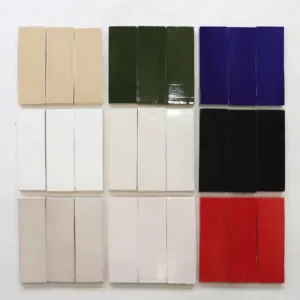
Handmade glazed tile gets much of its character from the relationship between clay body, glaze, firing, and surface design. A project may begin with a color reference, but the final specification involves more choices: gloss level, edge appearance, format, and how much visual variation is acceptable. Buyers considering custom handmade glazed tiles should describe the desired effect in practical terms before discussing production.
Customization does not always mean creating an entirely new product. It can involve selecting from available colors, refining a shade, choosing a surface treatment, or coordinating formats for a particular space. The supplier needs to clarify which options are available for the chosen tile and which may affect quantities, timing, or approvals.
Define the Visual Direction
A useful brief explains the intended mood and where the tile will be used. A backsplash, bathroom wall, fireplace surround, and hospitality feature may call for different color intensity and surface character. Include photographs of surrounding materials, but identify the details that matter most rather than asking for a general match.
Describe color beyond a name
Color names such as sage, cream, or navy can mean different things across collections and screens. Share a reference sample or image and note whether you prefer a warmer, cooler, lighter, or deeper result. Also explain how the tile will sit beside cabinetry, stone, paint, or metal finishes.
Ask the supplier how glaze color is approved for the specific product. A digital image can guide a conversation, but buyers should review a physical sample or other agreed reference before confirming a custom shade. Keep the approved reference with the specification so later discussions use the same point of comparison.
Choose surface character
Glaze can influence sheen, texture, and how light moves across a wall. A reflective surface may draw attention to color and shape, while a softer finish can make a more restrained backdrop. Decide whether the design should look uniform or include visible variation, then communicate that preference clearly.
The phrase handmade glazed tiles covers products with a handcrafted look, but the degree of surface variation and the available finishes depend on the particular item. Ask the supplier to explain which visual features are intentional and what sample can represent the proposed selection.
Specify Format and Installation Context
A custom look needs to work at the scale of the space. Record the wall dimensions, corners, openings, shelves, and edges where tile meets another material. These details can affect the format, layout, and amount of material required.
Coordinate shape and layout
Decide whether the design uses one format or combines several. If a project includes borders, contrasting pieces, or a repeated pattern, show how these elements relate in a drawing or marked-up elevation. A clear visual plan helps the supplier and installer discuss the same arrangement.
Consider where cuts will appear around outlets, niches, corners, and trim. The intended pattern may need small adjustments to finish cleanly at the edge of a wall. Discuss those transitions before approving the order, especially when the design relies on symmetry or a repeated motif.
Confirm the intended application
Tell the supplier whether the product is planned for a wall, backsplash, or another location. Ask for product details and intended-use guidance for the exact item. Where the installation has moisture or cleaning requirements, include those conditions in the brief and confirm the full assembly with the project team.
Do not assume that a decorative finish alone establishes suitability for every surface. Product specifications, substrate preparation, setting materials, and installer guidance all matter. Request the information needed for the project and have the appropriate team review it before final approval.
Use Samples to Make Decisions
Samples help translate a written description into something the design team can assess. Review the tile beside the materials that will remain in the room, and observe it under both daylight and installed lighting. Record what the team approves: color direction, sheen, surface character, and any acceptable variation.
If a sample needs revision, give specific feedback. “Slightly warmer” or “less reflective” is more useful when paired with a reference or clear comparison. Ask whether the change affects price, minimum order quantity, or schedule. Keep prior samples labeled so they are not confused with the approved version.
Handmade appearance can include variation, so discuss expectations before production. Ask how the supplier describes the product’s visual range and how the delivered order will be checked against the agreed reference. The goal is to understand what consistency means for the selected design, rather than assuming every piece will look identical.
Turn Choices Into an Order Brief
A well-prepared brief brings visual decisions together with practical requirements. List the selected product, color reference, finish, format, intended application, quantity, sample approval, and schedule. Note open questions and record who signs off on each change.
JLA Ceramics is a ceramic tile manufacturer offering handmade tiles for residential and commercial projects. They provide custom design and OEM services, including options for tile sizes, colors, finishes, and logos. Buyers can visit JLA Ceramics to explore the handmade tile collection and discuss customization requirements for their next project.