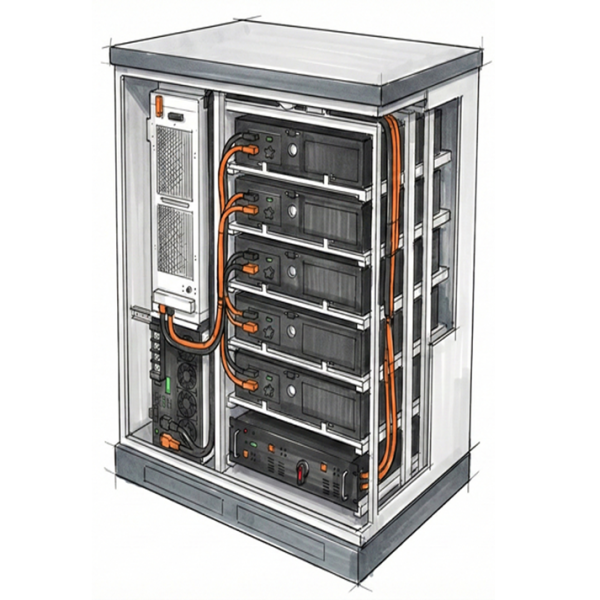
Energy storage systems have become an important solution for businesses seeking better energy management, improved resilience, and greater control over electricity costs. As more companies invest in commercial and industrial energy storage, one of the most common concerns is how long these systems can continue operating effectively.
The question of battery durability is closely connected with system design, operating conditions, maintenance practices, and battery management technology. Enjoypowers recognizes that customers need realistic expectations rather than overly optimistic claims when evaluating long-term energy storage investments.
Understanding battery degradation helps businesses make better decisions about system sizing, application selection, and lifecycle planning. A well-designed energy storage system can provide reliable performance for many years when properly managed and operated under suitable conditions.
What Is The Lifespan Of Energy Storage Systems? Key Factors That Influence Battery Life
Many customers ask, “What is the lifespan of energy storage systems?” It depends on several technical and environmental factors—there’s no single fixed number. The battery chemistry, usage pattern, depth of discharge, charging strategy, and temperature control all influence how quickly performance changes over time.
Lithium-ion batteries, which are widely used in commercial and industrial applications, gradually lose capacity through normal chemical aging. This process is known as battery degradation. Over time, the available energy capacity decreases, meaning the system may store slightly less energy compared with when it was new.
The operating cycle is one of the most important factors affecting battery life. A system that frequently performs deep charging and discharging cycles may experience faster degradation than one operating within moderate limits. Businesses should evaluate their energy goals carefully to determine whether their application requires daily peak shaving, backup power, renewable energy integration, or another operating mode.
Battery temperature management is another critical factor. Excessive heat can accelerate chemical reactions inside battery cells and reduce long-term performance. Professional energy storage systems typically include thermal management features that help maintain suitable operating conditions and protect battery health.
The battery management system (BMS) also plays an essential role. A reliable BMS monitors voltage, temperature, current, and cell balance to help prevent unsafe operating conditions. Advanced control strategies allow the system to optimize charging and discharging behavior, supporting more stable performance throughout its service period.
Why Are People Against BESS? Addressing Common Concerns About Battery Energy Storage
Although battery energy storage systems are becoming increasingly popular, some people still question their safety, environmental impact, and economic value. Understanding why concerns exist can help businesses evaluate the technology more objectively.
The question “Why are people against BESS?” often comes from concerns about battery safety. Some people worry about thermal events, fire risks, or improper installation. However, modern systems are designed with multiple protection layers, including battery monitoring, protective enclosures, temperature control, and safety management functions.
Another concern relates to battery disposal and environmental impact. Battery recycling remains an important part of the energy storage industry. As technology develops, recycling processes are improving, allowing valuable materials to be recovered and reducing waste from used batteries.
Cost is also a factor influencing opinions about BESS adoption. Initial investment can be significant, especially for large-scale commercial installations. However, businesses often evaluate these systems based on long-term operational benefits, including demand charge reduction, improved power reliability, and better integration of renewable energy sources.
Enjoypowers focuses on helping customers understand the practical value of energy storage instead of viewing it as a simple equipment purchase. A properly designed system should match the customer’s electricity usage profile, financial objectives, and operational requirements.
How Battery Management and System Design Improve Long-Term Performance
The lifespan of an energy storage system is not determined only by the battery cells themselves. The complete system architecture has a major influence on reliability and efficiency. Power conversion systems, energy management platforms, and protection components all contribute to overall performance.
A high-quality Power Conversion System (PCS) controls the conversion between AC and DC power, allowing batteries to charge and discharge efficiently. Poor conversion efficiency or unstable operation may create unnecessary stress on battery components and reduce system effectiveness.
Energy management software also helps optimize operation. By analyzing electricity consumption patterns, the system can decide when to charge, discharge, or remain idle. This intelligent scheduling reduces unnecessary cycling and helps preserve battery capacity.
Regular maintenance is another important part of lifecycle management. Monitoring system performance, checking operating conditions, and reviewing battery health data allow potential issues to be identified before they become serious problems. Preventive maintenance can improve reliability and support consistent energy savings.
Enjoypowers emphasizes that customers should consider the entire energy storage solution rather than focusing only on battery specifications. The combination of suitable hardware, intelligent controls, and professional engineering support determines the real-world value of the investment.
Planning for the Future of Commercial Energy Storage
Businesses considering energy storage should evaluate their expected usage over the entire project lifecycle. Instead of asking only about initial performance, decision-makers should consider how the system will operate after several years of service.
Battery capacity naturally decreases with time, but this does not always mean the system becomes unusable. Many applications can continue delivering value even as available capacity gradually declines. For example, a system originally designed for peak demand reduction may still provide useful support after years of operation.
Accurate planning also includes selecting the right battery size and operating strategy. Oversizing or improper application design may increase costs without delivering additional benefits. A detailed analysis of energy consumption, electricity pricing, and operational needs helps create a more effective solution.
When businesses understand battery degradation and system lifecycle factors, they can make more informed decisions about energy storage investments. Enjoypowers supports this approach by focusing on practical system performance, reliable operation, and solutions designed around real customer requirements.
Conclusion
Energy storage systems are long-term investments that require realistic expectations about battery aging and operational performance. Factors such as battery chemistry, temperature management, cycling behavior, system design, and maintenance all influence how effectively a system performs over time.
The future value of energy storage depends on selecting suitable technology and managing it correctly throughout its lifecycle. By understanding degradation processes and addressing common concerns, businesses can use energy storage as a reliable tool for improving energy efficiency and operational flexibility.