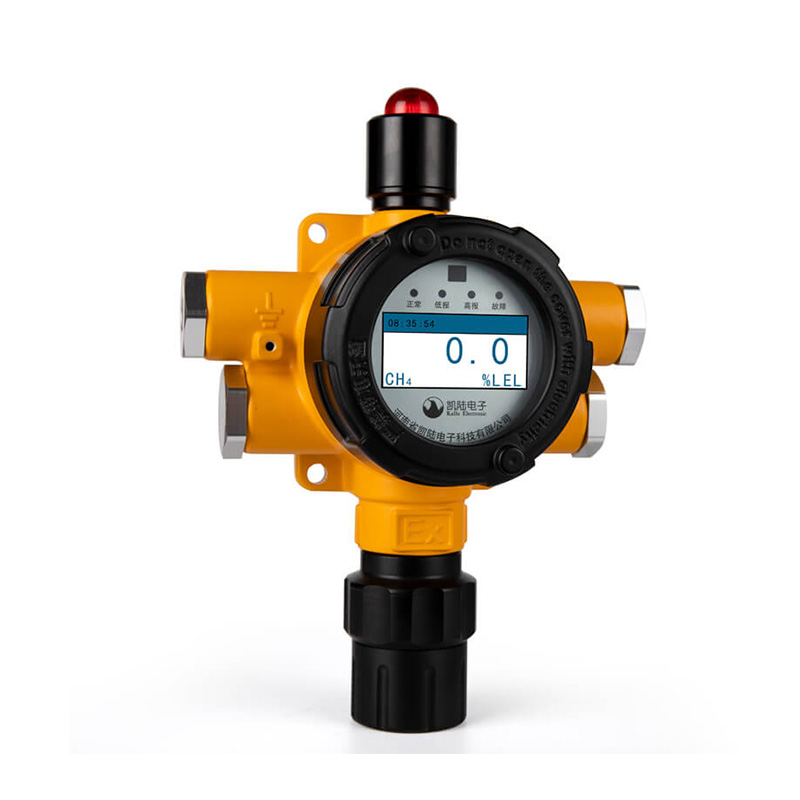
The number 10 on a gas display can describe a fraction of a flammability limit or a percentage of the air sample. The unit tells the two readings apart. On fixed gas detectors, a reading in %LEL is relative to the lower explosive limit of a reference gas. An alarm setpoint tells the system when to initiate its configured response.
The distinction matters when an operator looks back at a warning. The displayed reading describes the measured condition at a particular detector, and the setpoint explains why the alarm was called. The event is easier to interpret when the unit, the sensing conditions, and the response are documented together.
The Reference Behind the Number
The lower explosive limit is the lowest concentration at which a particular combustible gas can propagate flame in air under the relevant conditions. A reading of 10% LEL represents one tenth of the reference gas’s lower explosive limit. Percent by volume describes the share of the mixture made up by the gas itself.
The unit on a fixed LEL monitor therefore matters as much as its digits. For example, a reference gas with a lower explosive limit of 5% by volume would have one tenth of that limit at 0.5% by volume. This arithmetic explains the scale. A site alarm threshold and a conversion for a different reference gas require their own basis.
What the Sensor Actually Responds To
A gas other than the one used for calibration can produce a different response at the same concentration. The reference gas for a fixed LEL monitor establishes the relationship between the instrument’s signal and its displayed value. Interpreting a reading from a different fuel depends on the sensor’s response to that fuel. In an area with several possible fuels, the detector schedule gives the reference gas needed to interpret each point.
In a catalytic detector, combustible gas oxidizes on a sensing bead and the resulting change in electrical resistance provides a measurement signal. The reaction requires sufficient oxygen. Some contaminants, including certain silicone and sulfur compounds, can impair sensitivity, so the credibility of a low reading depends in part on the condition of the sensing element.
Reading the Last Digit
The smallest change that a display can show and the size of its possible measurement error answer separate questions. For the catalytic version of the Bosean GT-K90, the stated resolution is 0.1% LEL and the specified display error is ±3% LEL. Those figures belong in separate fields when comparing fixed gas detectors.
The GTQ-DX401 methane channel illustrates how range and step size fit together. Its specifications give a range of 0 to 100% LEL in 1% LEL steps. Low and high alarm indications identify configured states. A detector’s measurement range, its display increment, and its alarm threshold each answer a different design question about the channel.
A decimal point may help an operator see the direction of a trend. The stated error still governs how much confidence to place in the last digit. The same distinction applies to alarm records. The displayed number describes what the instrument reported, while the specifications establish the conditions for interpreting that number.
What Changes at the Setpoint
The controller compares the measured value with the trigger condition configured for a fixed LEL monitor. A site can assign distinct actions to different alarm levels. The relationship among the measured gas, the threshold, and the action belongs to the particular installation and the purpose of the alarm.
For example, a Bosean BH-50 channel shows the received concentration and can activate an audible or visual alarm or a relay output when the configured condition is met. An assigned contact may command an exhaust system or initiate a trip. Whether the equipment actually responds is a separate observation from whether the contact issued a command.
For an operator, knowing which channel entered alarm locates the measurement in the system. For the engineer reviewing the alarm, the configured relay assignment explains what was requested of the connected equipment. These are distinct facts even when the panel display and the output change at the same time.
Reconstructing an Alarm From the Record
The value of an alarm record depends on how readily the reading can be tied to its channel and the event that followed. Records for fixed gas detectors can identify the time, the display unit, and the reference gas. The same record for a Bosean detector and panel installation can document which threshold called for which output. Some details may come from the test notes or channel schedule.
Where the alarm is intended to start ventilation, a review has reason to distinguish the concentration at the sensor from the relay command and the observed fan response. A steady reading elsewhere in the building answers a different question. The record has to identify the location and time of each observation before a comparison is meaningful.
A log showing 10 at the detector before the fan starts puts the two observations in order. If the timestamps share a time base, comparing them with the relay event can show whether the gap occurred before or after the command. A missing event time leaves that part of the sequence unresolved.
SEO Title: Fixed LEL Monitors: How to Read Alarm Levels
Meta Description: See what a %LEL reading refers to, how calibration gas affects the reading and what a setpoint means for the alarm and event record.