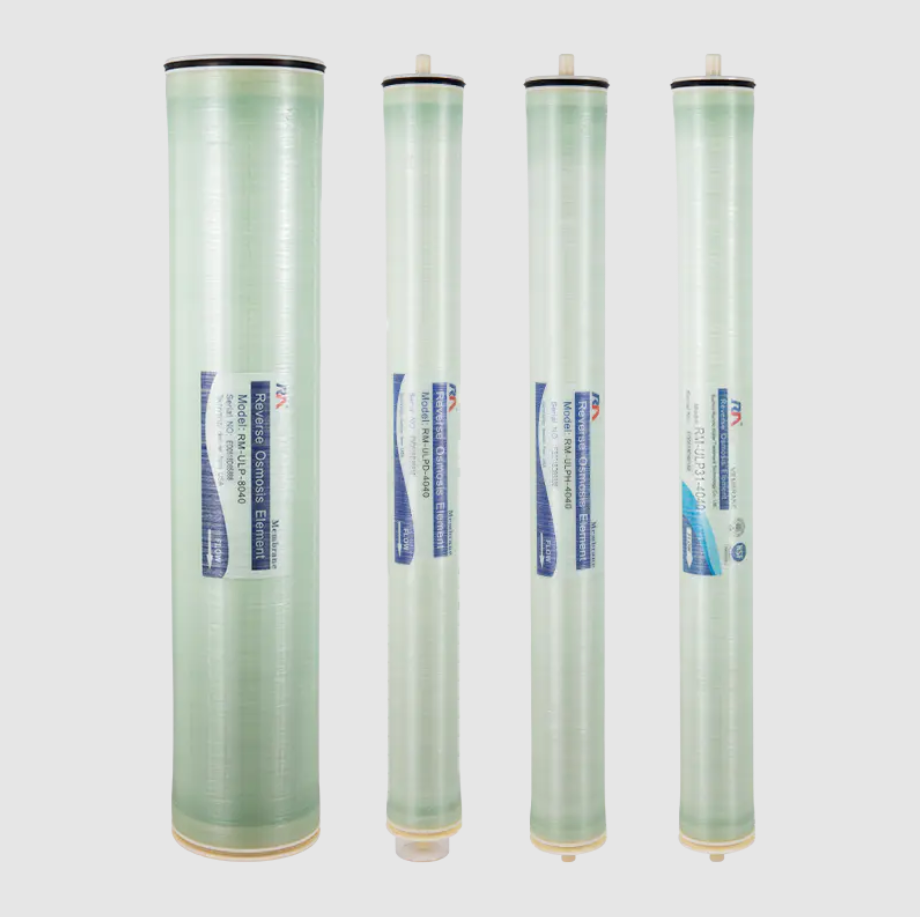
Reverse osmosis systems are widely used to reduce dissolved salts and other unwanted substances in water. The process may look simple from the outside, but several components must work together for stable treatment. Among them, the membrane element performs the main separation task. Its condition and operating environment can directly affect permeate quality, water recovery, pressure demand, and system efficiency.
For water treatment companies, small business owners, engineering contractors, and solution providers, understanding this component is useful before selecting or replacing RO equipment. Basic knowledge of membrane structure, feed-water limits, pressure, and maintenance can make product comparisons clearer and reduce design mismatches.
How Separation Takes Place Inside an RO System
In an RO unit, feed water is pushed through a semi-permeable membrane under pressure. Water molecules pass through the membrane layer, while a large part of the dissolved salts and other substances remain on the concentrate side. The treated stream is called permeate, while the rejected stream carries the concentrated impurities away.
This separation process depends on more than membrane material alone. Feed pressure, temperature, salt concentration, pH, flow rate, and pretreatment quality all affect performance. A membrane may work differently when the feed-water conditions change, even if the same model is used.
Pretreatment is therefore important. Suspended solids, hardness, oxidants, and biological growth can shorten membrane life or increase fouling. Filtration, softening, or chemical dosing may be required according to the water source.
System operators should also watch pressure drop, permeate flow, conductivity, and recovery rate over time. These values help identify scaling, fouling, or membrane damage early.
Why Pressure and Salt Rejection Matter
Operating pressure is a practical issue because it affects both separation performance and energy use. Higher pressure can increase water passage, but it also increases pump demand. The right pressure should match the membrane design and the feed-water quality rather than simply being raised to obtain more output.
Salt rejection is another key indicator. It shows how effectively the membrane limits dissolved salts from entering the permeate stream. For industrial users, this directly relates to whether the treated water can meet process requirements such as boiler feed, pure water preparation, or product processing.
The membrane element should therefore be evaluated as part of the complete RO system. Pump size, vessel design, pretreatment, piping, monitoring instruments, and target water quality all need to match. Looking at one specification in isolation can give an incomplete view of system performance.
For B2B buyers, quality and operating cost are closely connected. A suitable design can help avoid excessive pressure, frequent replacement, unstable water quality, or unnecessary energy use.
Matching the Product to Feed-Water Conditions
The first step in product selection is to understand the incoming water. Surface water, groundwater, tap water, and municipal water can differ greatly in dissolved salts, suspended matter, hardness, and organic content. These differences affect both pretreatment and membrane choice.
Buyers should also confirm the required permeate volume and water-quality target. A factory using purified water for production may have different requirements from a boiler recharge system. Food processing and pharmaceutical manufacturing may also need tighter control over water consistency and system hygiene.
Runmo supplies the ULP/XULP series of thin-film composite membranes made with polyamide composite materials. These products are designed for ultra-low or extreme-low pressure operation. According to the provided product information, their operating pressure is about two-thirds of conventional composite membrane pressure, while the desalination rate can reach 99.3%.
This type of product is intended for feed water with salt content below 2,000 ppm. Suitable sources include surface water, groundwater, tap water, and municipal water. Applications include pure water preparation, boiler recharge water, food processing, and pharmaceutical manufacturing.
What Lower-Pressure Operation Can Change
Lower operating pressure can influence more than the energy bill. When a system can meet its treatment target at reduced pressure, pump requirements may be lower. Related piping, pressure vessels, and other supporting equipment may also be selected with different cost considerations.
This can matter in water treatment projects where capital budget and running cost are both important. However, lower-pressure operation should still be evaluated together with feed quality, recovery rate, pretreatment, and required permeate output.
For engineering companies, it is useful to compare not only the membrane price but also the effect on the surrounding system. Initial equipment cost, replacement frequency, energy demand, installation space, delivery schedule, and service conditions can all affect the final project decision.
A clear technical comparison also improves supplier discussions. Buyers can ask for operating pressure, rejection rate, feed-water limits, application range, and expected system conditions before confirming a purchase.
A Practical Basis for Better RO Decisions
A reliable RO system depends on correct matching rather than one isolated specification. Feed-water analysis, pretreatment, pressure, flow, salt rejection, and maintenance planning should be considered together. This helps buyers understand why two products with similar sizes may behave differently in actual operation.
For projects that need low-pressure desalination, the ULP/XULP series provides one possible option to evaluate. Runmo serves B2B water treatment customers and focuses on practical product supply for water treatment applications. Buyers can compare quality, project cost, and delivery requirements with their operating conditions before making a final choice. Share feed-water data, target quality, capacity, and delivery schedule with their team to discuss a suitable solution.