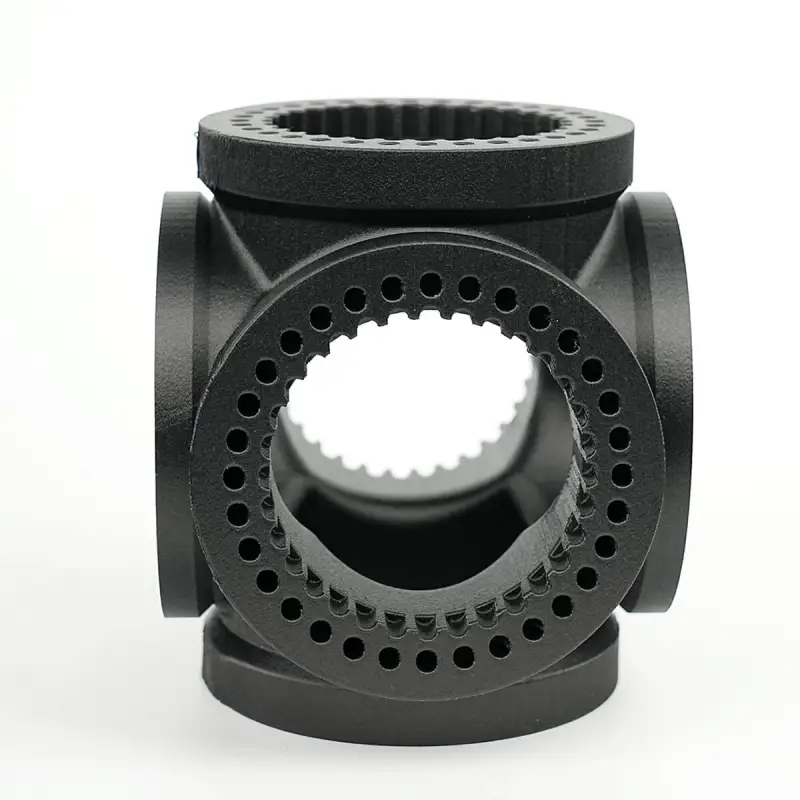
Functional 3D printed parts need more than a material that simply produces a clean model. They require a practical balance of rigidity, dimensional stability, weight, printability, and repeatability. PLA-CF is a compelling 3D print filament because its 15% carbon fiber reinforcement increases rigidity and supports stable, lightweight functional parts while retaining the familiar processing advantages of PLA.
What Makes Engineering Filaments Suitable for Functional Parts?
Engineering filaments are selected when a printed component must do a job rather than only demonstrate a shape. Brackets, fixtures, housings, tool accessories, prototypes, and mechanical components can place greater demands on stiffness and dimensional accuracy than decorative models.
Material selection should therefore begin with the part’s operating conditions. Buyers should consider mechanical loads, temperature, impact requirements, environmental exposure, print complexity, and the capabilities of the available printer. No single engineering filament is ideal for every application, so matching material properties to the intended function is more reliable than choosing solely by strength claims.
Why Carbon Fiber Changes PLA Performance
SUNLU PLA-CF combines PLA with 15% carbon fiber filling. According to SUNLU’s published product information, the reinforcement significantly improves rigidity and dimensional stability while maintaining a lightweight printed part. This combination can be valuable when a component needs to hold its shape under ordinary mechanical loads without adding unnecessary mass.
Carbon fiber reinforcement also gives the printed surface a distinctive matte appearance. For professional prototypes, equipment covers, fixtures, and visible functional components, that finish can provide a more technical appearance while helping reduce the visual prominence of layer lines.
PLA-CF Specifications Buyers Should Check
For procurement and production teams, measurable specifications are more useful than general descriptions. SUNLU lists PLA-CF with a 1.75 ± 0.02 mm diameter tolerance, helping support consistent extrusion and predictable material feeding. The filament is offered in 1.75 mm, 2.85 mm, and 3.00 mm diameter options, with black listed on the official product page.
SUNLU’s published performance data lists tensile strength at 44±5 MPa, flexural strength at 79±5 MPa, density at 1.23 g/cm³, and heat deflection temperature at 55.5±3°C. These figures help engineers assess whether the material is appropriate for a particular part instead of assuming that carbon fiber reinforcement automatically makes it suitable for every demanding environment.
Printing Settings Matter as Much as Material Choice
A capable engineering filament can still produce poor parts when printing parameters are unsuitable. SUNLU recommends a nozzle temperature of 215–225°C at 50–100 mm/s, or 225–245°C at 100–200 mm/s for PLA-CF. The recommended bed temperature is 50–60°C, with a retraction distance of 0.8–1.2 mm and retraction speed of 30–40 mm/s.
These ranges provide a starting point, but production teams should validate settings on their printer, nozzle, build surface, and part geometry. Test coupons or small pilot components can help establish a repeatable profile before a material is introduced into a larger production workflow.
How to Choose 3D Print Filament for Functional Applications
The best 3D print filament depends on what the finished component must withstand. PLA-CF is particularly relevant when rigidity, dimensional stability, low weight, and relatively straightforward FDM processing are priorities. It can be considered for functional prototypes, fixtures, brackets, tool accessories, and other components where its published thermal and mechanical limits fit the application.
For parts exposed to substantially higher temperatures, repeated impact, or demanding chemical and environmental conditions, buyers should evaluate other engineering materials instead. SUNLU’s engineering range includes materials such as PA6-CF and PA12-CF, which are designed for different performance requirements. PA6-CF, for example, is described by SUNLU as a high-strength, high-rigidity material with heat resistance, while PA12-CF emphasizes lower moisture absorption and dimensional stability compared with PA6.
Managing Carbon Fiber Filament in Production
Material handling should be included in the production plan. SUNLU advises keeping PLA-CF dry during printing and lists a drying temperature of 50°C. Moisture management is important because absorbed moisture can affect extrusion consistency and surface quality.
Printer hardware also deserves attention when selecting carbon fiber-reinforced 3D print filament. Carbon fiber is abrasive, so businesses should verify that their nozzle is appropriate for filled materials and account for potential wear when establishing maintenance intervals. This can prevent gradual changes in extrusion performance during repeated production.
A Practical Role for PLA-CF in Professional Printing
Engineering filaments need to deliver predictable results without creating unnecessary process complexity. PLA-CF occupies a useful middle ground: it provides carbon fiber reinforcement for greater rigidity and dimensional stability while remaining based on PLA.
SUNLU PLA-CF is therefore worth considering when the application aligns with its published specifications. Its 15% carbon fiber content, controlled 1.75 ± 0.02 mm tolerance, defined printing ranges, and documented mechanical properties give professional users concrete information for material qualification.
Choosing the Right Material for the Job
The strongest engineering filament on paper is not automatically the best production material. A better purchasing decision starts with the part’s load, temperature, dimensional requirements, environment, and printer capabilities. PLA-CF can be a practical choice when lightweight rigidity and stable dimensions matter, while more specialized materials may be preferable for extreme thermal or mechanical conditions.
For business 3D printing teams, a disciplined material-selection process can reduce failed prints, unnecessary testing, and inconsistent production results. By evaluating engineering filaments against real application requirements and using verified specifications, companies can build a more dependable 3D printing workflow.