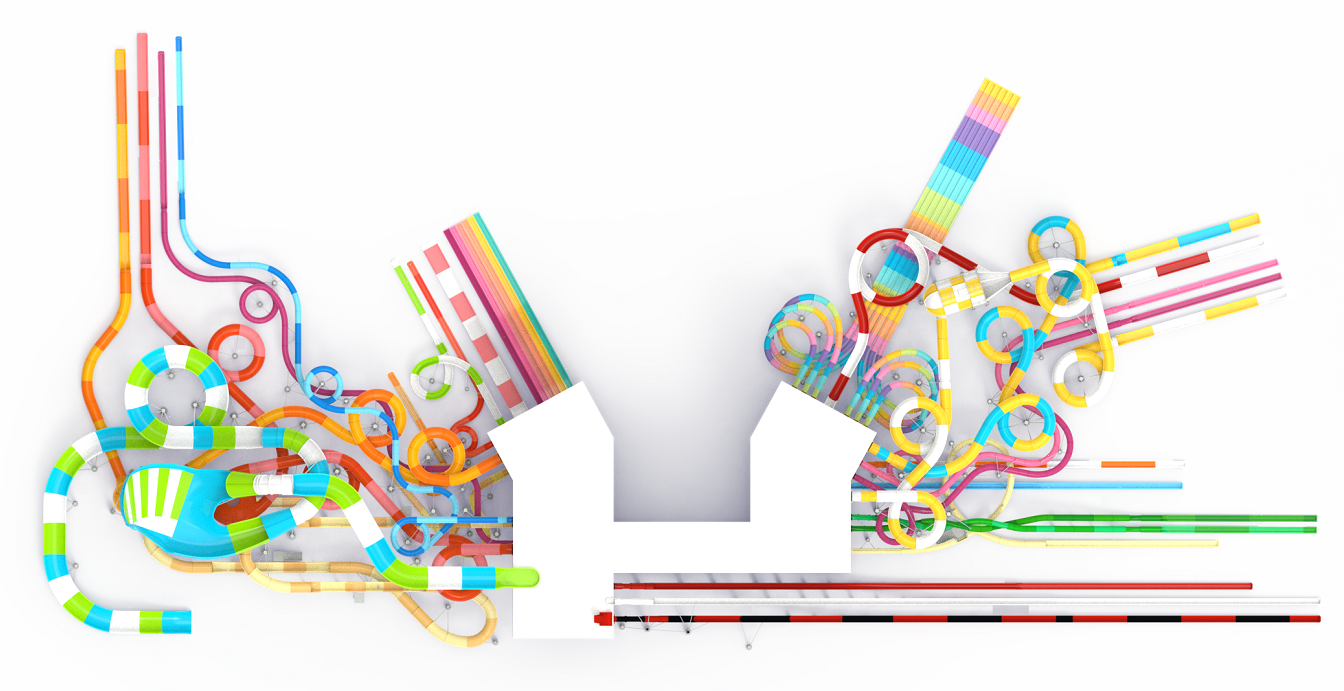
A successful water park attraction depends on more than an eye-catching design. Behind every large combination slide tower is a coordinated process involving structural preparation, water circulation planning, fiberglass production, and professional installation. For operators planning a new attraction, understanding how these stages connect can help reduce construction challenges and improve long-term performance.
Combination slide towers integrate multiple slide experiences into one structure, allowing visitors to enjoy different paths such as body slides, raft slides, and family slides from a shared platform. As a professional water slide supplier, Dalang provides complete solutions that connect design, manufacturing, and installation to support efficient water slide construction projects.
Planning the Structure Before Water Slide Construction Begins
The first step of a combination slide tower project is accurate planning. Unlike standalone attractions, combination towers require careful coordination between the tower structure, slide layout, visitor flow, and supporting systems.
During the design stage, engineers evaluate factors such as available land area, tower height, slide direction, water flow requirements, and maintenance access. A well-planned layout helps ensure that different slide routes operate smoothly without interfering with each other.
For example, a large combination tower may include several types of attractions connected to one platform, including high-speed body slides and family raft slides. The final configuration needs to balance excitement, capacity, safety requirements, and space efficiency.
A professional water slide supplier should provide detailed technical drawings and installation guidance before construction begins. This allows civil engineering teams, plumbing contractors, and equipment installers to work according to the same project plan.
Coordinating Civil Works and Tower Foundation
Civil works create the foundation for the entire attraction. The tower structure must be installed on a stable base that can support the weight of the slide system, water impact forces, and daily operation loads.
Before fiberglass components arrive, the construction team usually completes foundation work, embedded parts installation, drainage preparation, and platform construction. Accurate measurements during this phase are essential because even small positioning errors can affect later fiberglass installation.
The connection between the tower and slide sections requires precise alignment. A properly prepared foundation reduces adjustment work during installation and helps maintain the designed sliding experience.
For large-scale projects, communication between the attraction manufacturer and local construction teams is especially important. Technical documents, installation instructions, and engineering support help ensure that the site preparation matches the equipment requirements.
Integrating Plumbing Systems With Slide Performance
Water systems are another key part of combination slide tower installation. The plumbing design directly influences sliding speed, comfort, and operational stability.
Each slide type has different water requirements. Body slides may require a consistent water layer to maintain smooth movement, while larger raft slides often need carefully controlled water flow to support heavier loads.
During water slide construction, engineers must coordinate pipe routes, pump systems, filtration connections, and drainage solutions. Proper planning helps avoid issues such as uneven water distribution, excessive splash, or insufficient flow.
A complete solution from a water slide supplier should consider not only the fiberglass slide itself but also the supporting water circulation system. This approach helps operators achieve reliable performance after the attraction opens.
Fiberglass Manufacturing and On-Site Installation
Fiberglass is widely used for water slide production because it offers durability, smooth surfaces, and design flexibility. However, the installation process requires careful handling and technical experience.
Before installation, fiberglass sections are manufactured according to the approved design drawings. Each section must match the planned dimensions so that connections between slide pieces remain secure and smooth.
At the construction site, installation teams assemble the fiberglass sections step by step, checking alignment, connection points, and surface quality. Professional installation helps reduce problems such as uneven joints, water leakage, or changes in sliding speed.
Dalang provides fiberglass water slide solutions with professional manufacturing and installation support for different attraction types, including combination slides and body slides.
Why Combination Slide Towers Require Integrated Project Management
A combination slide tower involves multiple construction stages and different teams. Without effective coordination, delays can occur between civil works, plumbing installation, and fiberglass assembly.
Choosing an experienced water slide supplier can simplify project management by connecting different parts of the process. From initial design and equipment production to installation guidance and commissioning, an integrated approach helps maintain consistency throughout the project.
This is especially important for customized attractions where slide routes, tower structures, and water systems are designed according to specific site conditions.
The Role of Splash Tower Design in Modern Water Parks
Splash tower attractions are another popular choice for water parks because they combine interactive elements, multiple play levels, and family-friendly experiences. Similar to combination slides, splash towers require careful coordination between structural design, water supply systems, and installation.
A well-designed splash tower can include spraying features, tipping elements, climbing areas, and smaller slides while maintaining efficient water management. For operators looking to create diverse guest experiences, combining different attraction types within one park layout can improve space utilization.
Working with a capable water slide supplier allows these attractions to be planned together with larger slide systems, creating a balanced water park environment.
Conclusion
Combination slide towers are complex attractions that require close coordination between civil works, plumbing systems, and fiberglass installation. Every stage, from foundation preparation to final commissioning, affects the safety, performance, and visitor experience of the finished attraction.
By selecting an experienced partner like Dalang, water park developers can receive professional support throughout the water slide construction process, from design planning to equipment installation. With proper coordination and technical expertise, combination slide towers can become reliable and engaging attractions that meet the needs of modern water parks.