In the world of animal fat processing, lard and tallow rendering has long been considered a mature, even routine, operation. Yet for producers, the reality is far more complex. Dark color, pungent odor, high energy intensity, and the environmental burden of wastewater and exhaust gas emissions make rendering a persistent operational challenge.
Many conventional rendering lines still operate with outdated equipment, inefficient energy usage, and manual intervention at critical points. The result is not only higher production costs but also inconsistent product quality and increased environmental compliance risk.
Ocean’s 80TPD lard and tallow rendering project for Wilmar (Zhoukou) demonstrates that a well-engineered, fully automated rendering line can simultaneously address these long-standing issues. The project proves that significant energy reduction, superior product quality, and environmental responsibility are not competing priorities — they are achievable together through intelligent process design and advanced engineering.
The Challenge: Overcoming Deep-Rooted Operational Inefficiencies
Animal fat rendering involves transforming fatty tissue into clean, stable fats for food, feed, and oleochemical applications. Yet the path from raw material to finished product is fraught with practical difficulties.
The raw lard and tallow typically exhibit significant color and odor issues. These must be effectively removed through decolorization and deodorization to meet consumer expectations and market standards. Traditional methods often rely on excessive temperatures or chemical treatments, which can compromise product quality and increase costs.
The rendering process itself is inherently energy-intensive. Melting, drying, and deodorizing animal fats demand substantial heat and electricity, and without careful engineering, much of that energy is wasted. At the same time, rendering generates wastewater and exhaust gas emissions that require proper treatment to minimize environmental impact. Increasingly stringent environmental regulations mean that producers can no longer afford to treat these as secondary concerns.
The Solution: An Integrated, Energy-Smart Rendering Line
Zhengzhou Ocean’s solution for the Wilmar (Zhoukou) project combines innovative process integration, advanced automation, and a holistic approach to energy recovery and emission control.
From Raw Material to Clean Oil: A Fully Enclosed Process
The production line begins with raw material handling — unpacking, conveying, crushing, and online metal detection ensure that only clean, safe material enters the system. The prepared fat is then sent to a pre-melting pot before progressing to the energy-saving melting furnace.
The core innovation in this stage is the use of secondary steam to heat the energy-saving melting furnace. By recovering and reusing thermal energy that would otherwise be lost, the system dramatically reduces the demand for fresh steam, directly cutting energy consumption. All temperature, pressure, and flow parameters are managed through a fully automated control system, eliminating the variability and inefficiency that often arise from manual operations.
Dry Vacuum Energy-Saving Refining Technology
The process employs dry vacuum energy-saving refining technology, which offers remarkable flexibility in heating options — it can be operated with either steam or thermal oil, eliminating the need for a dedicated boiler design. This simplifies the utility system and reduces capital investment.
The entire refining process operates continuously and automatically. Real-time temperature monitoring ensures precise process control, while integrated energy-saving devices enable the recovery and reuse of thermal energy throughout the system. This continuous vacuum dry oil extraction method significantly reduces wastewater discharge compared to conventional wet rendering processes.
A Fully Sealed, Odor-Controlled Environment
One of the most challenging aspects of animal fat rendering is the strong odor that permeates conventional facilities. Ocean’s solution addresses this at the source: all equipment operates in a fully sealed production environment from material input to oil output. Odors are collected and subjected to concentrated treatment, minimizing both product contamination and environmental nuisance. The enclosed system also reduces the risk of foreign matter entering the oil, improving overall product quality.
Compact and Efficient Vacuum System
The vacuum system has been redesigned for compactness and efficiency. Through intelligent energy reuse, the system requires only one water ring pump, significantly reducing electricity consumption compared to traditional multi-stage vacuum configurations. This simplification not only lowers power costs but also reduces maintenance requirements and floor space.
Safety, Cleanability, and Maintenance
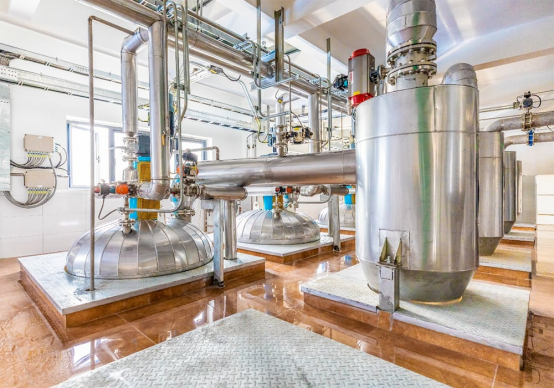
The project incorporates extensive practical design features that enhance safety and maintainability. High-temperature equipment is equipped with overall insulation jackets that prevent burn accidents during operation, reduce heat loss, and improve overall energy efficiency. Pipes and interfaces are designed for easy disassembly, and all equipment surfaces are polished for smooth exteriors that facilitate cleaning and maintenance.
All material-contact parts — both equipment and piping — are constructed from 304 stainless steel. This ensures corrosion resistance, prevents product contamination, and allows for CIP (clean-in-place) cleaning at the end of the refining process, leaving no residue and ensuring hygienic production conditions.
Results: Quantifiable Engineering Impact
The Wilmar (Zhoukou) 80TPD lard rendering project has delivered clear and significant results across multiple operational dimensions.
Steam consumption has been reduced by 50 percent, representing a dramatic improvement in energy efficiency. For an 80-ton-per-day facility, this translates into substantial annual cost savings and a meaningful reduction in the facility’s carbon footprint.
Electricity consumption has been reduced, driven primarily by the simplified and more efficient vacuum system design. This further contributes to lower operating costs and improved overall process economics.
Labor costs have been reduced and production efficiency has increased through extensive process automation and streamlined equipment design. The continuous, fully enclosed operation requires less manual intervention, allowing the facility to operate with a leaner workforce while maintaining consistent output and quality.
Wastewater discharge has been reduced, aligning with increasingly stringent environmental regulations and reducing the cost and complexity of waste treatment. The dry vacuum process eliminates the large volumes of process water associated with conventional wet rendering methods.
Beyond these quantifiable metrics, the project has also delivered qualitative benefits that are equally valuable to the operator: consistent product quality, improved worker safety through the sealed and insulated equipment design, reduced maintenance burden through the use of stainless steel and cleanable surfaces, and enhanced environmental compliance through odor control and reduced emissions.
Conclusion
The Wilmar (Zhoukou) 80TPD lard rendering project exemplifies a modern approach to animal fat processing that moves beyond conventional, energy-intensive methods. Through intelligent integration of heat recovery, advanced automation, and practical engineering design, Zhengzhou Ocean has demonstrated that substantial energy reduction and superior operational performance are achievable in rendering facilities.
The success of this project provides a compelling blueprint for producers seeking to upgrade their existing rendering lines or build new facilities that meet today’s standards of efficiency, sustainability, and product quality.
As a globally leading turnkey oils and fats processing solutions provider, Zhengzhou Ocean brings deep expertise to animal fat processing, offering complete solutions from raw material handling through to finished product storage. Our commitment to energy efficiency, environmental responsibility, and operational excellence is reflected in every project we deliver.
Learn more about our animal fat rendering solutions and comprehensive animal fat refining production lines to discover how we can support your next project from concept to commissioning.