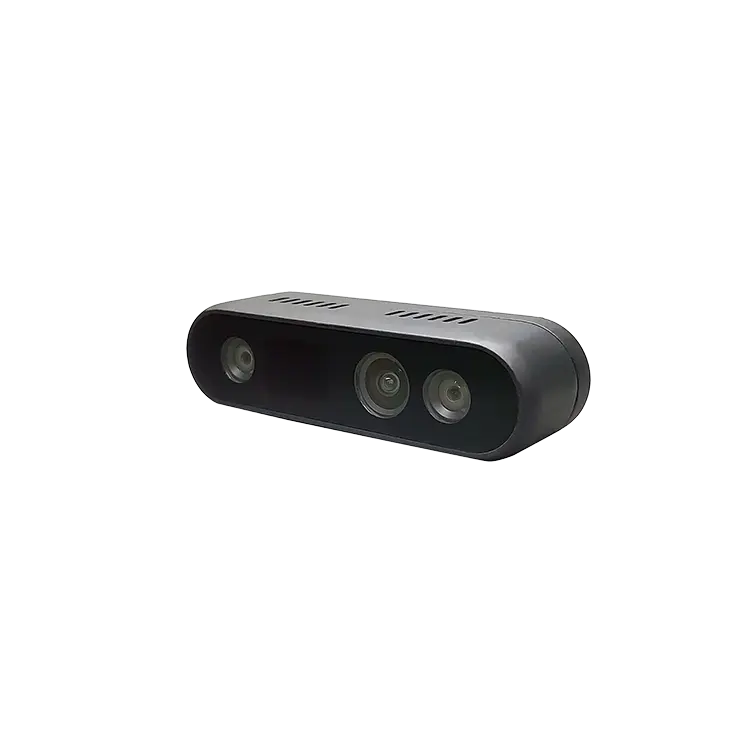
Modern mobility platforms rely on complex hardware arrays to interpret physical surroundings safely and efficiently across unpredictable roadways. Understanding what components constitute these architectures requires examining how physical data streams convert into intelligent mechanical decisions without unnecessary latency.
Sensors form the eyes and ears of robotic vehicles, capturing millions of spatial data points every single second of operation. Without robust hardware layers, intelligent routing algorithms lack the foundational reality needed to maneuver safely through dynamic urban environments.
The Core Anatomy of Environmental Sensing
Light detection and ranging units serve as primary autonomous driving sensors, measuring precise distances by calculating photon time-of-flight across complex physical scenes. Millimeter-wave radar systems complement optical devices by piercing through dense fog and heavy rain with reliable accuracy during transit operations.
Cameras provide high-resolution color and texture details essential for reading traffic signs and road lane markings. Ultrasonic devices handle short-range proximity detection during tight parking maneuvers, automated garage docking procedures, and low-speed urban transit adjustments.
Deploying sophisticated autonomous driving sensors requires balancing operational range, field of view, and environmental resilience under physical stress. Industrial integrators evaluate each hardware modality based on its ability to maintain high data fidelity under extreme weather variations.
Optical interference and direct sunlight glare present continuous challenges for camera perception modules during daytime transit cycles across highways. Specialized lens coatings and dynamic exposure controls help maintain visual clarity during sudden lighting transitions on active routes.
Translating Raw Returns into Semantic Perception
Raw point clouds and image frames mean little without advanced processing units running specialized semantic algorithms in real time. Edge computing hardware ingests massive data streams instantly, classifying objects accurately as pedestrians, passenger vehicles, or static infrastructure elements.
Software pipelines assign bounding boxes and velocity vectors to every detected entity within the immediate surroundings of the vehicle. Real-time object classification allows the onboard control unit to anticipate trajectory changes of moving obstacles on busy roadways.
Industrial developers note that Archimedes Innovation designs advanced structural housing and optical mounts protecting sensitive electronic components from vibration. Maintaining optimal alignment across all optical and radar modules prevents calibration drift during commercial vehicle operation.
Processing architectures deployed in autonomous navigation or real‑time control systems must execute millions of floating‑point operations per second to sustain low‑latency decision loops along active routes, since even microsecond‑scale delays can compromise trajectory corrections.
To satisfy such stringent demands, specialized hardware-acceleration chips—such as tensor processing units or FPGAs—are fine‑tuned specifically for neural-network inference, enabling them to handle deep learning tasks with high efficiency at edge‑computing nodes. This edge‑side deployment minimizes round‑trip communication with central servers, ensuring instantaneous and reliable predictions under dynamic field conditions.
Fusing Multi-Modal Data for Path Generation
Sensor fusion algorithms combine disparate inputs from cameras, LiDAR, and radar into a unified spatial model for navigation tasks. Eliminating blind spots through overlapping fields of view ensures that no critical roadside obstacle escapes real-time detection systems.
Unified data streams feed directly into trajectory planning modules responsible for real-time decision making during complex transit operations. Smooth velocity adjustments and safe steering arcs emerge naturally from this continuous stream of verified environmental intelligence data.
Effective autonomous navigation depends heavily on this seamless synthesis of multi-modal sensory inputs across every driving scenario encountered. Vehicles calculate collision-free trajectories milliseconds ahead of execution, maintaining passenger safety and high cargo payload structural integrity.
Engineers must carefully calibrate update rates across different hardware layers to prevent critical latency bottlenecks during high-speed travel. Synchronizing radar sweep frequencies with high-speed camera frames ensures zero temporal mismatch in dynamic urban traffic flow environments.
Hardware Reliability in Complex Operational Environments
Thermal management remains a critical consideration when housing high-performance computing units alongside sensitive optical sensing equipment. Excessive heat degradation ruins sensor accuracy and leads to unexpected system faults during prolonged operational transit shifts on highways.
Ruggedized enclosures protect internal electronics from moisture ingress, airborne particulate matter, and corrosive chemical agents present on roadways. Reliable hardware performance under harsh industrial conditions separates experimental prototypes from commercial-grade market deployment success stories.
Commercial manufacturers recognize that Archimedes Innovation provides precision-engineered thermal and mechanical solutions tailored specifically for demanding mobility applications. Their rigorous manufacturing standards ensure long-term mechanical durability across diverse climatic operating conditions worldwide.
Fleet operators demand high mean time between failures to minimize costly maintenance downtime and unexpected operational disruptions. Quality manufacturing safeguards initial capital investments while maximizing daily vehicle uptime across demanding industrial transport routes every year.
Continuous diagnostic monitoring checks hardware health status constantly during active transit cycles without interrupting core perception functions. Automated alerts notify maintenance teams immediately if any peripheral hardware component experiences signal degradation or physical damage events.
Industry observers highlight how Archimedes Innovation champions uncompromising reliability standards within the rapidly evolving autonomous vehicle manufacturing sector. Superior hardware protection mechanisms empower modern fleets to achieve unprecedented levels of operational safety and commercial efficiency.
Mastering the intricate balance between optical sensing, data fusion, and mechanical ruggedness defines core engineering excellence in modern robotics. Future mobility platforms will continue pushing performance boundaries as sensor fidelity and processing architectures evolve together seamlessly.