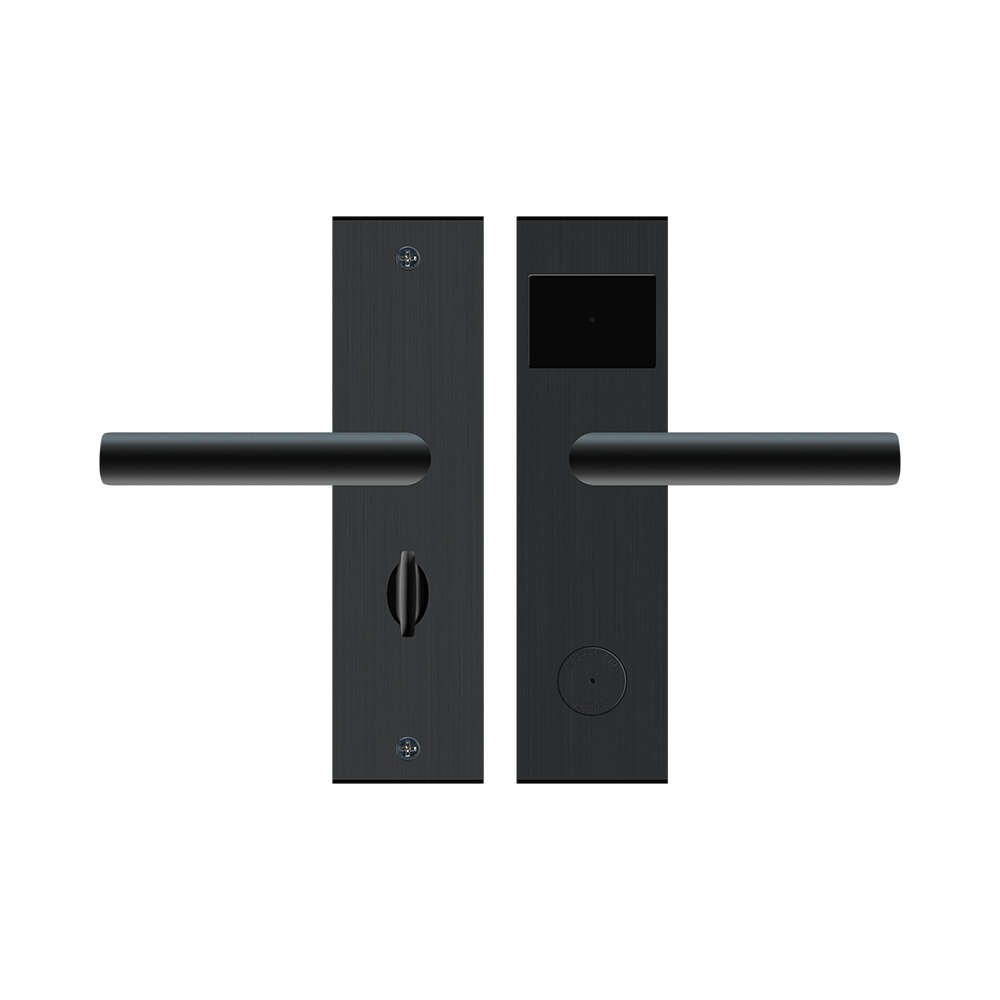
The digital transformation of hospitality has made electronic hotel locks the standard for securing guest rooms and managing staff access. These systems offer unparalleled convenience and security over traditional mechanical keys.1 However, when property owners and integrators consider adopting a new electronic hotel door lock system, a fundamental question often arises: Do digital locks need WiFi?
The short answer is no, not always. While network connectivity offers powerful remote management capabilities, many robust digital lock systems, including core solutions from Trudian, are engineered to operate reliably without being constantly connected to a wireless network.
Understanding the different types of electronic hotel locks—and how they communicate—is key to choosing the right system for scalability, reliability, and security.
The Two Modes of Digital Lock Operation
Digital locks operate primarily in one of two modes, determined by how they receive their operating commands and log their data:
1. Offline (Card-Based) Communication
The vast majority of commercial and electronic hotel door lock system installations utilize an offline, card-based system. This mode provides maximum security and operational stability because it does not rely on the building’s WiFi signal.
| Feature | Offline Lock System (e.g., RFID) | Online Lock System (e.g., WiFi/Zigbee) |
| Communication Medium | RFID/NFC Cards, System Encoder | WiFi Network, Central Gateway |
| Data Transmission | Via physical key card and staff programmer | Real-time over the Internet/LAN |
| Real-Time Control | No (Requires card update or physical device) | Yes (Remote lock/unlock, status check) |
| Connectivity Requirement | None (Operates on batteries) | Constant, reliable WiFi coverage |
| Ideal Use Case | Large hotels, properties prioritizing stability & low cost | Boutique hotels, smart apartment rentals |
How Offline Locks Work:
In an offline system, the digital lock itself only contains a local database of authorized card credentials. The key card—which is encoded at the front desk using a dedicated system encoder—acts as a physical vessel carrying the access data, including the room number and the guest’s check-out time. When the card is presented, the lock verifies the encrypted data locally and opens the door.
For maintenance and auditing, staff use a specialized handheld device to physically download the door’s access logs (who entered when) or to upload new firmware or time settings. This separation from the WiFi network ensures the lock’s functionality is completely independent of power or internet outages, offering superior reliability—a hallmark of Trudian’s core electronic hotel locks.
2. Online (Networked) Communication
Online locks are locks that communicate wirelessly, either directly via a built-in WiFi module or through a low-power mesh network (like Zigbee or Z-Wave) connected to a central gateway.
Why Online Locks Are Used:
The main benefit of online connectivity is real-time management. This allows the hotel to remotely:
- Issue new virtual keys to guests via a mobile app.
- Monitor the door status (locked/unlocked) instantaneously.
- Receive immediate alerts for low battery or forced entry attempts.
- Remotely lock or unlock the door from a central management console.
While this convenience is attractive, it introduces dependency on the quality and stability of the building’s wireless network.
The Benefits of Offline Reliability for Hotel Security
For most large-scale hospitality operations, the benefits of the robust offline system outweigh the convenience of real-time remote control:
- Guaranteed Uptime: Since electronic hotel locks run on battery power and do not rely on the network, they continue to grant access even if the property loses power, internet, or the wireless router fails. This is non-negotiable for guest safety and satisfaction.
- Simplified Installation and Maintenance: Offline locks require minimal infrastructure outside of the door itself, reducing installation complexity and eliminating the need for complex network troubleshooting across thousands of doors.
- Low Power Consumption: By avoiding continuous WiFi communication, the locks conserve battery life, meaning fewer battery changes and lower maintenance costs over the system’s lifespan.
Choosing the Right Electronic Hotel Door Lock System with Trudian
A leading electronic hotel locks provider like Trudian offers solutions that cater to both needs, allowing properties to select the appropriate level of connectivity:
- For maximum stability and scalability in large hotels, the offline RFID card system is the superior choice. It guarantees reliable access control without the vulnerabilities associated with a constantly connected network.
- For hybrid properties or small boutique hotels prioritizing guest mobile access, IP-enabled locks offer the required convenience, provided the property has an extremely stable WiFi infrastructure.
In summary, digital locks are defined by their electronic access and management, not necessarily by WiFi connectivity. While the latest electronic hotel door lock system may offer network features, the most secure and reliable solutions for the hospitality sector, particularly those from a trusted Trudian supplier, often rely on proven offline technology for guaranteed, uninterrupted access control.